The Progeria Research Foundation April 2008
Friday, May 30, 2008: Play Poker for Progeria
Join us on Friday night, May 30th, for a fun night of Texas Hold 'em Poker, silent auction, food, drinks, Red Sox tickets and 50/50 raffles and lots more in PRF's home town of Peabody, MA. It's $100 to play poker, $25 if you want to just come enjoy a night out, and $100 to sponsor a table -- such a DEAL!
If we have the 150 players we expect, first prize will be $4,000!
Back by popular demand is our "Pocketbooks for Progeria" Auction. Attendees can choose from several designer purses, and the lucky high bidders then open them to see what's inside: lottery tickets, prizes, and/or up to $500 cash - WOW!
Click here to buy tickets or become a sponsor.
Sincerely,
Audrey Gordon, Executive Director
The Progeria Research Foundation
Visit http://www.progeriaresearch.org
Thursday, April 24, 2008


Saturday, April 19, 2008
Delivering a sailboat to Mobjack on the Chesapeake

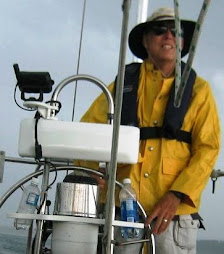
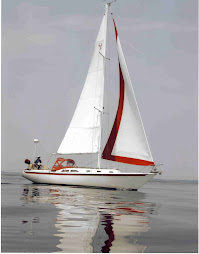
Four of us moved a sailboat to a friend’s marina (in his backyard) in Mobjack Va from a marina upstream on the Chesapeake. The owner of this recently purchased used boat was up in Marblehead MA unable to moderate the extreme tactics of his volunteer crew. Initially the winds were light but then came up for an exciting sail. Larry, all people and equipment arrived relatively intact. Enjoy your new boat.
Friday, April 4, 2008
Center for Children With Special Needs - Bangladesh
The picture below is of the President of the Rotary Club of Banani Dhaka Bangladesh presenting my donation check to an official of the Centre for Children with Special Needs in Dhaka Bangladesh. The Centre specializes in helping children with all types of crippling diseases including polio survivors. Their web page is: http://www.ccsnbangladesh.org/ .
I visited this club in December 2008 on a Polio National Immunization Day Rotary trip. More about the trip can be found at: Blog: http://www.geneseeker.blogspot.com/
YouTube page, Rotary NID: http://youtube.com/group/NIDCMG

I visited this club in December 2008 on a Polio National Immunization Day Rotary trip. More about the trip can be found at: Blog: http://www.geneseeker.blogspot.com/
YouTube page, Rotary NID: http://youtube.com/group/NIDCMG

Monday, March 31, 2008
How did we get here - tracing genes

The Genographic Project Public Participation
Mitochondrial DNA Database
The Genographic Project with the support of The National Geographic society is trying to map human migrations. For about $100 they will send you a kit to collect two samples of inner cheek cells which they will use to see where you fit in the pattern. For men they sequence part of the Y chromosome and for women the mitochondria. Samples from people all over the world allow them to map human migrations in the last 100,000 years. I have had both my Y chromosome and mitochondria done. The Y chromosome shows your paternal pattern and the mitochondria your maternal pattern. Their site explains why these two portions of the human genome are used. As women don’t have a Y chromosome they can only trace their maternal history. My Y pattern or haplogroup is most commonly found in India except for a few of us whose ancestors migrated to Europe thousands of years ago. My mitochondrial haplogroup is H which is most common in Europe and is one of the newest haplogroups to evolve as shown by the chart.
Sign up at https://www3.nationalgeographic.com/genographic/ and learn your history.
I have used their service to post my Y haplotype on the web and a number of people with my last name who have had their Y chromosome done have contacted me. The system works.
The chart is from a recent paper on the current status of the project that can be accessed from the web page listed above.
Sign up at https://www3.nationalgeographic.com/genographic/ and learn your history.
I have used their service to post my Y haplotype on the web and a number of people with my last name who have had their Y chromosome done have contacted me. The system works.
The chart is from a recent paper on the current status of the project that can be accessed from the web page listed above.
Thursday, March 27, 2008
micro RNA reduces cholesterol
I have discussed micro RNA in past blogs. The link below shows evidence that a Danish firm (Santaris - http://www.santaris.com/ ) has been able to reduce cholesterol by inhibition a specific micro RNA sequence that interferes with an RNA that regulates cholesterol levels. The targeted a microRNA is called miR-122. In the past few years it has become apparent the small (~20 nucleotide long) RNA molecules are major factors in the regulation of our chemistries and the disease processes. The beauty of this technique is that all therapeutic molecules are chemically very similar but just have different nucleotide sequences. Therefore, it will be much easier to make a new drug than the old way in which each drug is chemically very different from the last one. It is a revolution.
They have a hepatitis C drug under development. If hepatitis C then why not Polio? It holds the potential for a cure but is there commercial potential or is the polio survivors market too small? Perhaps NGOs like Rotary Inernational can help. Helge, do you know this company?
Take a look at the link below
http://sciencenow.sciencemag.org/cgi/content/full/2008/326/2
Press release from Santaris
Issued – Wednesday December 19, 2007, London, UK & Copenhagen, Denmark
GlaxoSmithKline and Santaris Pharma enter global R&D alliance to
discover, develop and commercialise RNA antagonists as novel antivirals
GlaxoSmithKline (GSK) and Santaris Pharma today announced that they have entered into
a worldwide strategic alliance for the discovery, development and commercialisation of
novel medicines against viral diseases. The collaboration provides GSK access to
patented RNA antagonist compounds, based on Santaris Pharma’s unique Locked Nucleic
Acid technology, for development as potential new therapies for selected viral diseases.
GlaxoSmithKline will participate in the alliance through its Infectious Diseases Centre of
Excellence for Drug Discovery (ID CEDD). Under the terms of the agreement, Santaris Pharma
will grant GlaxoSmithKline options to drug candidates discovered and developed under the
collaboration in up to four different viral disease programmes. In each of these R&D programmes,
Santaris Pharma will be responsible for the discovery and development of RNA antagonist drug
candidates through to completion of Phase IIa (“Clinical Proof of Concept”), at which point
GlaxoSmithKline has an exclusive option to license each compound for further development and
commercialisation on a worldwide basis. GSK also has an option to include as an additional
programme in the collaboration, SPC3649, Santaris Pharma’s preclinical LNA-antimiR against
microRNA-122, which is being developed by Santaris Pharma as a potential new therapy for
Hepatitis C infection.
Santaris Pharma will receive an upfront fee for the first antiviral programme of $3m (£1.5m) and
GSK will make an equity investment of $5m (£2.5m) in Santaris Pharma. If candidate drugs from
the first viral target programme are successful and reach the market, GSK could make additional
milestone payments to Santaris Pharma of up to $140m (£69.5m) for this first programme.
Similar upfront payments and milestones are payable by GSK to Santaris Pharma in respect of
each of the further 3 antiviral programmes if GSK elects to initiate these additional programmes in
the collaboration. In addition, if GSK exercises its option to further develop and commercialise
SPC3649, it will make a further up front payment of $5m (£2.5m) and additional milestones of up
to $122m (£60.5m) if the drug obtains regulatory approvals in Europe and the USA. Overall,
under the collaboration Santaris Pharma could be eligible to receive in excess of $700m (£347m)
in upfront fees and development and regulatory milestones payments. If a product is successfully
commercialised, Santaris Pharma will receive high single to double-digit royalties on worldwide
sales of alliance products.
Announcing the collaboration, Dr Henrik Ørum, Santaris Pharma’s Chief Scientific Officer and VP
Business Development commented:
”We are delighted that GlaxoSmithKline has chosen to collaborate with Santaris Pharma in the
RNA medicines field. We are confident that the high potency and exquisite precision of RNA
targeting achievable by LNA oligonucleotides has the potential to achieve clinical breakthroughs
in viral infections. I can think of no stronger partner for Santaris Pharma in infectious disease
research than GSK.”
Dr Zhi Hong, Senior Vice President and Head of GlaxoSmithKline’s ID CEDD said:
2
“
They have a hepatitis C drug under development. If hepatitis C then why not Polio? It holds the potential for a cure but is there commercial potential or is the polio survivors market too small? Perhaps NGOs like Rotary Inernational can help. Helge, do you know this company?
Take a look at the link below
http://sciencenow.sciencemag.org/cgi/content/full/2008/326/2
Press release from Santaris
Issued – Wednesday December 19, 2007, London, UK & Copenhagen, Denmark
GlaxoSmithKline and Santaris Pharma enter global R&D alliance to
discover, develop and commercialise RNA antagonists as novel antivirals
GlaxoSmithKline (GSK) and Santaris Pharma today announced that they have entered into
a worldwide strategic alliance for the discovery, development and commercialisation of
novel medicines against viral diseases. The collaboration provides GSK access to
patented RNA antagonist compounds, based on Santaris Pharma’s unique Locked Nucleic
Acid technology, for development as potential new therapies for selected viral diseases.
GlaxoSmithKline will participate in the alliance through its Infectious Diseases Centre of
Excellence for Drug Discovery (ID CEDD). Under the terms of the agreement, Santaris Pharma
will grant GlaxoSmithKline options to drug candidates discovered and developed under the
collaboration in up to four different viral disease programmes. In each of these R&D programmes,
Santaris Pharma will be responsible for the discovery and development of RNA antagonist drug
candidates through to completion of Phase IIa (“Clinical Proof of Concept”), at which point
GlaxoSmithKline has an exclusive option to license each compound for further development and
commercialisation on a worldwide basis. GSK also has an option to include as an additional
programme in the collaboration, SPC3649, Santaris Pharma’s preclinical LNA-antimiR against
microRNA-122, which is being developed by Santaris Pharma as a potential new therapy for
Hepatitis C infection.
Santaris Pharma will receive an upfront fee for the first antiviral programme of $3m (£1.5m) and
GSK will make an equity investment of $5m (£2.5m) in Santaris Pharma. If candidate drugs from
the first viral target programme are successful and reach the market, GSK could make additional
milestone payments to Santaris Pharma of up to $140m (£69.5m) for this first programme.
Similar upfront payments and milestones are payable by GSK to Santaris Pharma in respect of
each of the further 3 antiviral programmes if GSK elects to initiate these additional programmes in
the collaboration. In addition, if GSK exercises its option to further develop and commercialise
SPC3649, it will make a further up front payment of $5m (£2.5m) and additional milestones of up
to $122m (£60.5m) if the drug obtains regulatory approvals in Europe and the USA. Overall,
under the collaboration Santaris Pharma could be eligible to receive in excess of $700m (£347m)
in upfront fees and development and regulatory milestones payments. If a product is successfully
commercialised, Santaris Pharma will receive high single to double-digit royalties on worldwide
sales of alliance products.
Announcing the collaboration, Dr Henrik Ørum, Santaris Pharma’s Chief Scientific Officer and VP
Business Development commented:
”We are delighted that GlaxoSmithKline has chosen to collaborate with Santaris Pharma in the
RNA medicines field. We are confident that the high potency and exquisite precision of RNA
targeting achievable by LNA oligonucleotides has the potential to achieve clinical breakthroughs
in viral infections. I can think of no stronger partner for Santaris Pharma in infectious disease
research than GSK.”
Dr Zhi Hong, Senior Vice President and Head of GlaxoSmithKline’s ID CEDD said:
2
“
Monday, March 24, 2008
Good water for Bangladesh
The Segway guy, Dean Kamen has two new systems for developing countries. One is an electrical generator that uses cow dung and the other is a water purifier than can run off of waste heat from the electrical generator. He is planing to use microcapitalizm in Bangladesh to help distribute both. A major purpose is to reduce disease with better water. The head of a hospital in Dhaka Bangladesh told me on a recent visit that diarrheal diseases were the next major problem after polio. In addition to infectious agents they have a problem with natural arsenic in the ground water that on chronic use causes a diarrheal disease.
Read more at the following links:
http://money.cnn.com/2006/02/16/technology/business2_futureboy0216/index.htm
http://money.cnn.com/2006/02/16/technology/business2_futureboy0216/index.htm
Read more at the following links:
http://money.cnn.com/2006/02/16/technology/business2_futureboy0216/index.htm
http://money.cnn.com/2006/02/16/technology/business2_futureboy0216/index.htm
Sunday, March 23, 2008
New Web Site - Centre for Children with Special Needs

We have created a web site for the Centre for Children with Special Needs in Dhaka Bangladesh. This clinic for physically challenged children, (polio survivors and others) was created and supported by the Banani Dhaka Rotary Club.
If you click on the link below it should take you to the site.
http://www.ccsnbangladesh.org/
The home page has a button on the left that says “CONTACT US”. It would be great if you would visit the site, click on “CONTACT US”, fill out the form and click on “SEND”. This is a first pass at the site created with Yahoo “Site Solution” and we would appreciate your comments and suggestions using the “CONTACT US” portion of the site.
Thanks very much for your help.
Thursday, March 20, 2008
A new web page is up for the Bangladesh Centre for Children with Special Needs
Hi all.
As you may know, I am trying to raise money for the Bangladesh Centre for Children with Special Needs and have given several talks to Rotary groups in MA and NC. Another step in this process is the creation of a web page for the group . This is a work in progress and any suggestions would be appreciated.
all the best
Carl
Sunday, March 16, 2008
A new theory on the control of aging
I have long believed that we don’t wear out but are turned off after a certain age is reached. One tragic example is the genetic disease Progeria where children age prematurely due to a defect in their lamin gene that results in the reduced ability of stem cells to carry out normal and continuous tissue regeneration that keeps us young during part of our life. Progeria shows that without this regeneration we would all age much more rapidly like so many other animals.
Another mechanism has also come to light in recent years. This is the effect of micro inhibitory RNAs which are defined below from http://en.wikipedia.org/ . Only a few percent of our genome actually codes for proteins, these RNA molecules are coded by some of the so-called “junk” DNA segments.
In genetics, microRNAs (miRNA) are single-stranded RNA molecules of about 21-23 nucleotides in length, which regulate gene expression. miRNAs are encoded by genes that are transcribed from DNA but not translated into protein (non-coding RNA); instead they are processed from primary transcripts known as pri-miRNA to short stem-loop structures called pre-miRNA and finally to functional miRNA. Mature miRNA molecules are partially complementary to one or more messenger RNA (mRNA) molecules, and their main function is to downregulate gene expression. They were first described in 1993 by Lee and colleagues in the Victor Ambros lab [1], yet the term microRNA was only introduced in 2001 in a set of three articles in Science (26 October 2001).[2]
Picture of a microRNA precursor that is shortened eventually to the 21-23 nucleotide form.:

Euenia Wang of the
In general microRNAs, while themselves not coding for any protein product, negatively regulate the expression of target genes by either degrading their message or inhibiting translation by binding to their 3'-untranslated region (UTR). Thus, possible derailment of these negative regulators for gene expression in mid-life may be the putative force inducing molecular frailty in individual cell signaling, and in time leading to tissue-wide dysfunction. A challenge for future research is then to identify these dysfunctional microRNAs, in order to develop advance diagnosis and therapy to combat mid-life decline, a preventive medicine approach to block, delay or reduce the risk of old-age diseases.
Friday, March 14, 2008
Re: Bangladesh presentation to the Southern Pines NC Rotary Club
Way to go Carl.
Peter and I are at our MultiDistrict Pets in Nashua -- big bonus, got to hug Annie who is attending!
Good for you to keep getting the message out. Peter has a great program. Would be fun to see yours sometime.
Sue
Peter and I are at our MultiDistrict Pets in Nashua -- big bonus, got to hug Annie who is attending!
Good for you to keep getting the message out. Peter has a great program. Would be fun to see yours sometime.
Sue
Bangladesh presentation to the Southern Pines NC Rotary Club
Today I gave my first presentation in
Carl
http://www.nationalgolfclub.com/

Monday, March 10, 2008
Stop Humger Now - Sandhills NC Rotary helps filling meal bags
I was privileged to participate in the fight against hunger activity of the Sandhills Rotary club of Pinehurst NC in cooperation with “Stop Hunger Now” (http://www.stophungernow.org/)
In less than two hours 25,000 meals were packaged by Rotary and Interact students from the area. Scientifically designed dried ingredients were combined into plastic bags that contained meals for six children. The mixture was high protein with vitamins. But, malnourished children cannot take mega doses of vitamins so they were adjusted to the appropriate level. At each station five people were required; one for soy protein, one for vitamins, one for dried vegetables and one for rice. The fifth held the bag under a funnel to collect the ingredients and placed the filled bags in a box. When full, a runner was called who to the box of 6-8 bags to the weighting station where rice was added or removed to obtain the correct weight. The bags were then sealed and packed for shipment. For each 1,000 meals a gong was sounded.
The process was very well organized and all went smoothly.
Some of the ingredients were cooked up for the volunteers and form personal experience tasted like bland rice-a-roni. This is on purpose so that local spices can be added if required and the food not be foreign to the tastes of the recipients. These meals were headed for Bolivia and school lunch programs. Part of the purpose is to encourage parents to send their children to school to get the healthy meal.
My congratulations to the Sandhills Rotary club.


In less than two hours 25,000 meals were packaged by Rotary and Interact students from the area. Scientifically designed dried ingredients were combined into plastic bags that contained meals for six children. The mixture was high protein with vitamins. But, malnourished children cannot take mega doses of vitamins so they were adjusted to the appropriate level. At each station five people were required; one for soy protein, one for vitamins, one for dried vegetables and one for rice. The fifth held the bag under a funnel to collect the ingredients and placed the filled bags in a box. When full, a runner was called who to the box of 6-8 bags to the weighting station where rice was added or removed to obtain the correct weight. The bags were then sealed and packed for shipment. For each 1,000 meals a gong was sounded.
The process was very well organized and all went smoothly.
Some of the ingredients were cooked up for the volunteers and form personal experience tasted like bland rice-a-roni. This is on purpose so that local spices can be added if required and the food not be foreign to the tastes of the recipients. These meals were headed for Bolivia and school lunch programs. Part of the purpose is to encourage parents to send their children to school to get the healthy meal.
My congratulations to the Sandhills Rotary club.


Wednesday, March 5, 2008
New hope for aging
By Mitch Leslie
ScienceNOW Daily News
3 March 2008
Researchers have unearthed new clues behind a disease that effectively turns young children into senior citizens. A protein called progerin prods stem cells to go astray, causing them to mature into the wrong cell types. The findings may have implications for understanding normal aging as well.
Children with Hutchinson-Gilford progeria syndrome (HGPS) develop late-life ailments such as osteoporosis and atherosclerosis, and they usually die from heart disease in their early teens. In 2003, scientists identified the wrongdoer as progerin, a faulty version of the protein lamin A. Normally, lamin A helps strengthen the cell nucleus, but progerin leads to misshapen nuclei and higher-than-normal amounts of DNA damage. Beyond that, researchers didn't know much about how progerin results in illness.
To learn more, cell biologists Paola Scaffidi and Tom Misteli of the U.S. National Cancer Institute in
So Scaffidi and Misteli tested whether progerin disrupted development of cultured mesenchymal stem cells. As the researchers report online this week in Nature Cell Biology, the mutant protein prodded some stem cells to take an alternative path and become blood vessel cells. Stem cells that did transform into bonemakers were hyperactive, a result that gibes with recent clinical findings that HGPS patients build up and break down bone more rapidly than normal, says Misteli.
The researchers also found that progerin-producing stem cells were loath to mature into fat cells, which could explain why HGPS patients typically lose the fat layer beneath the skin, leading to thin skin. Cells that carried an overactive form of Notch showed similar developmental disruptions, suggesting that progerin makes trouble by turning up the Notch pathway. The work "links the cellular and molecular defects with symptoms in these patients," says Misteli.
The results might also provide insight into aging itself. Scaffidi and Misteli previously demonstrated that even normal cells fashion some progerin (Science, 19 May 2006, p. 1059), and the new data suggest that this small quantity might promote aging by undermining stem cells' capacity to replace damaged or dead cells.
"The results make a lot of sense," says developmental biologist Thomas Gridley of the Jackson Laboratory in
Saturday, March 1, 2008
Subscribe to:
Posts (Atom)